品牌: Bright Aviation, China
型号: JZDFM01
描述: “Bright Aviation” develops, produces and sells JZDFM01 Distance Measuring Equipment(DME).

Airport facilities and brand suppliers

- Navigation ILS DVOR DME MB NDB Antenna Simulator PIR Civil Aviation Equipment Central Shelter DVOR Antenna Reflector Network Fiberglass Flexible Rod Aviation Obstruction Light Network Transmission System Navigation antenna
- Communication
- Weather
- Surveillance
- Terminal
- Transmission
- Instrument
- Lighting
- Power Supply
- Other Projects
Product


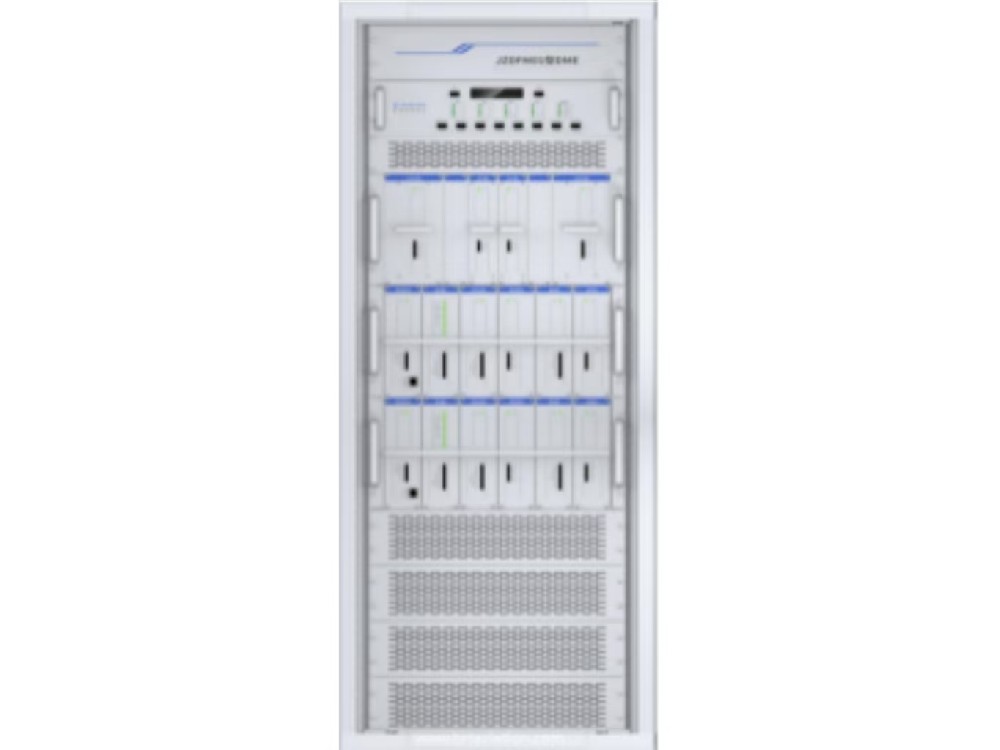
JZDFM01 Distance Measuring Equipment(DME)
一、Business
“Bright Aviation” supplies complete sets of equipment, including spare parts supply, installation and commissioning, flight check, panel repair, factory training, after-sales service, technical consultation, spare parts support, on-site fault repair, periodic inspection and other businesses.
二、Appearance
DME Cabinet | DME Antenna |
| 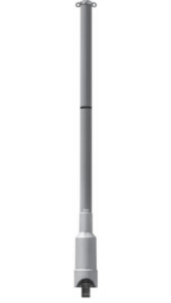 |
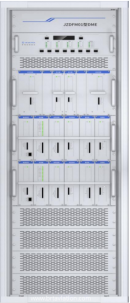
三、Overview
1. The DME provides a distance guidance information relative to the DME station (DME and DVOR are assembled together) to the incoming and outgoing flights of the civil aviation airport, so as to ensure the precise positioning of the aircraft relative to the DME station when flying in the air.
2. Provide equipment performance selection with the most advanced technology and the most reasonable system architecture, provide users with friendly Windows based graphical software interface, integrate the latest technical features, and reduce the number of system boards.
3. 35U standard cabinet design reduces the installation, maintenance and logistics costs of equipment, and software design and certification meet the strict RTCA DO-178 B/278 standard.
四、Characteristic
(1) Characteristic
1. Frequency: 962~1213MHz.
2. Peak output power: ≥1KW (1000W model, used with DVOR);≥100W (100W model, used with ILS).
3. Maximum system capacity: 200 aircraft/s.
4. Frequency stability: ≤±0.0002% (2ppm).
5. Frequency control: Frequency Synthesizer.
6. Coverage: 320km,at 11000 meters above the line of sight.
7. Transmitter pulse spacing: X channel pulse spacing 12±0.1µs, Y channel pulse spacing 30±0.1µs.
8. Pulse Shape Rise and Decay: 2.5µs±0.5µs.
9. Pulse width: 3.5±0.5µs.
10. Response pulse count: 900PPS~4800PPS.
11. System delay: X channel 50±0.02µs, Y channel 56±0.2µs.
12. Dynamic Range:: -110 dBW/m ² (-94dBm, -124 dBW) to -22 dBW/m ² (-6dBm, -36 dBW).
13. Receiver sensitivity: 70% is -124dBW (-94dBm, -110dBW/m ²).
14. Identification code: composed of 2 to 4 Morse code letters, programmable.
15. Time interval of identification code punctuation: 120ms, 360ms.
16. ID code repetition frequency: once every 30 seconds, the ratio of DVOR and DME jointly transmitting ID code is 3:1.
17. System shutdown conditions:
(1) Reply delay error exceeds 0.5µs ±0.2µs.
(2) The pulse spacing error exceeds 0.5µs ±0.2µs.
(3) The minimum transponder receiver sensitivity decreases by 6 dB or more.
(4) RF output power is reduced by 3dB.
(5) Continuous ident longer than 5 seconds.
(6) Lack of ident greater than 65 seconds.
(7) Reply efficiency is less than 70%.
(8) The transmitter count (PRF) drops below 700 PPS or exceeds 6000 PPS ( upper limit adjustable).
(2) Performance
1. Monitor: dual monitor redundancy and/or configuration, built-in BIT test.
2. The computer IP port accesses the equipment RMM software, which is based on networked local, remote control, and real-time synchronous linkage of RMM maintenance software.
3. Single transmitter and dual transmitter configurations (optional).
4. Graphical design of monitoring software, easy to operate, simple and convenient.
5. Real time sound, light and electricity integrity indication of system alarm information.
6. Multi level user permissions enable different management permissions and operation maintenance of equipment.
7. Log record query, analysis, printing and other functions throughout the life cycle.
8. Equipment important parameters and equipment operation status support graphical display.
9. Functions such as automatic saving, playback and analysis of equipment operation history data.
10. Primary Power: 110~220Vac±15%, 45~63Hz, single phase.
11. Standby Power:48Vdc backup battery, working for at least 4 hours.
(3) Structure
1. Weight: 240kg (1000W model); 200kg (100W model).
2. Dimensions: 170 (H) * 60 (W) * 60 (D) cm, 35U cabinet.
(4) Environment
1. Temperature: Indoor -10℃~+50℃; Outdoor -50℃~+70℃.
2. Relative humidity:Indoor 0~95% (non condensing); Outdoor 0~100% .
3. Altitude: 0~4500m MSL.
4. Work cycle: continuous unattended.
5. Wind speed conditions: the outdoor antenna can work normally when the wind speed is up to 161 km/h and the antenna icing is 1 cm thick.
五、Equipment List
No. | Name | Model | Qty/Unit | Remarks |
1 | DME Cabinet | JZDFM01 | 1 Set | Including dual transmitter, dual monitor and dual power supply system. |
2 | DME Antenna System | / | 1 Set | Including 1 DME antenna and 3 RF cables. |
3 | Other Accessories | / | 1 Set | / |
六、Remote Controller And Repeating Display Unit
(1)Characteristics
1. The remote controller communicates with the equipment and the repeating display unit through the Ethernet IP interface.
2. Primary Power: 110~220Vac±15%, 45~63Hz, single phase.
3. Weight: 6kg.
4. Size: 13.4 (H) * 60 (W) * 20 (D) cm, 3U chassis.
(2) Environment
1. Temperature: Indoor -10°C~+50°C.
2. Relative humidity: 0~95%.
3. Altitude: 0~4500m MSL.
(3) Configuration list
No. | Name | Model | Qty/Unit | Description |
1 | Remote Controller | / | 1 Set | 3U chassis,Mounted in the navigation duty room of the ATC Building. |
2 | Repeat Display Unit | / | 1 Set | 3U chassis,Mounted on the tower control desk panel of the ATC building. |
3 | Transmission Equipment | / | 1 Set | / |
4 | Other Accessories | / | 1 Set | / |
(4)Appearance
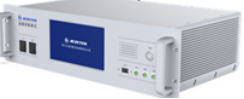
Remote controller (navigation duty room) and repeated display unit (tower), as shown in the figure.
七、RMM Software
The features of RMM software:
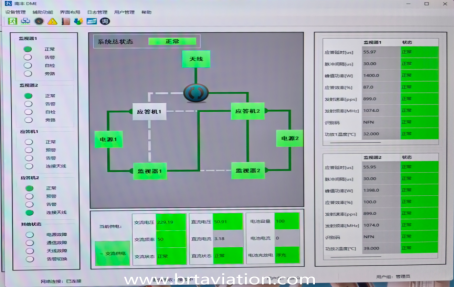
1、Visual design; Synchronization of local and remote status display information; Launch and monitoring parameters are checked regularly; Real time log recording and query; User level management.
2、RMM software provides Chinese and English operation interfaces to facilitate user operation and maintenance of equipment.
DME “Active working status” display interface (Chinese),as shown in the figure.
八、Meeting Standards
1. CAAC, 《Aeronautical radio navigation aids,Part 3: Technical Requirements for Distance Measuring Equipment》, MH/T-4006.3-1998。
2. CAAC,《Requirements for Electromagnetic Environment of Aviation Radio Navigation Stations (Stations)》, GB 6364-2013。
3. CAAC,《Civil Aviation Communication and Navigation Monitoring Station (Station) Setting Site Specification, Part 1: Navigation》, MH/T 4003.1-2021。
4. CAAC,《Test Requirements for Aviation Radio Navigation equipment, Part III: Distance Measuring Equipment》, AC-115-TM-2013-03。
5. ICAO Annex 10, Vol. 1,Aeronautical Telecommunications : Volume I, Radio Navigation Aids. Eighth Edition, July 2023,Amendment 93.
6. ICAO Doc 8071, Vol. 1,Manual on Testing of Radio Navigation Aids : Volume I, Testing of Ground-based Radio Navigation Systems, Fifth Edition - 2018.
7. ICAO Annex 14, Vol. 1, Aerodromes : Volume I, Aerodrome Design and Operations,Eighth Edition,July 2018,Amendment 15.
 上一篇:
上一篇: 下一篇:没有了!